On April 22nd, 2025, a terrorist attack targeted hindu tourists in Pahalgam, Kashmir, resulting in 26 deaths and casting a major shadow over India’s efforts to show stability in the region and make it a major tourist hub.
The assailants were members of an offshoot of Lashkar-e-Taiba a Pakistan based Kashmiri “liberation” terrorist group based in Pakistani Occupied Kashmir. They identified themselves as part of The Resistance Front (TRF), a group notorious for the killings of Kashmiri Pandits and Hindu travelers.
As the dust settled after the attack, it became clear that the consequences went far beyond the immediate loss of life. The attackers had chosen a very vulnerable moment in the tourist season to strike, which had just intensified the sense of fear that had begun to reemerge in the region. This was not a mere continuation of the familiar India-Pakistan terrorism dynamic, like the tragic 26/11 Mumbai attacks. This was a deliberate and targeted assault made to reignite sectarian violence, specifically aimed at Hindus, with the intention of deepening divisions and escalating tensions in the region.
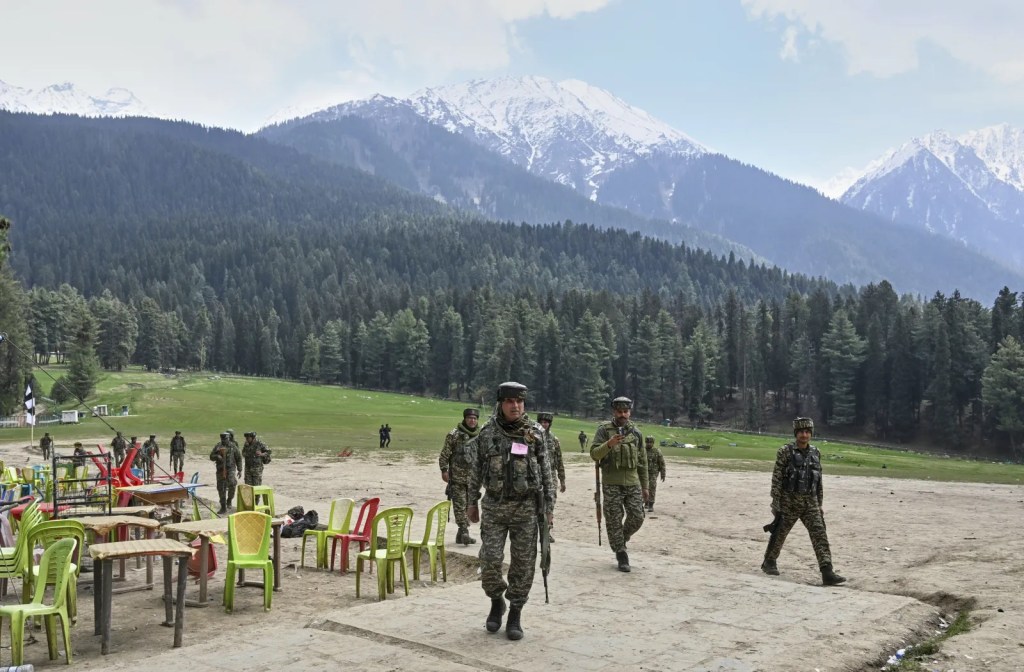
In the aftermath of the attack, the Indian state moved swiftly and decisively. Security forces were deployed in large numbers across the Kashyapamar valley, determined to restore order and send a clear message that such violence would not go unanswered. Pahalgam, a town once known for its peace and beauty, quickly became a marker of national resilience as armored vehicles patrolled its streets and surveillance operations intensified. Tourists were safely escorted out, and curfews were imposed.
The Government of India condemned the attack in the strongest possible terms, calling it not only a crime against innocent civilians but a direct challenge to the unity and sovereignty of the nation. New Delhi reiterated its long-standing demand that Pakistan dismantle terrorist infrastructure operating from its territory, emphasizing that India will act quickly to protect its citizens and uphold peace within its borders.
Beyond the immediate security response, the attack struck a much deeper chord with the Indian public. It rebuilt urgent conversations about the safety of minorities in Kashmir, the future of tourism, and the cost of prolonged instability.
However for many, the Pahalgam attack served as a painful reminder that peace in Kashmir is still a work in progress. But it also reinforced the belief that Hindustan, with its diversity, democracy, and deep-rooted civilizational strength, and will not allow violence to dictate its path forward.

 The Policy Lens
Leave a reply to Keshava Reddy Cancel reply