Tag: politics

  • Back to 1991: Why a Second Nuclear Arms Race Is Already Underway.

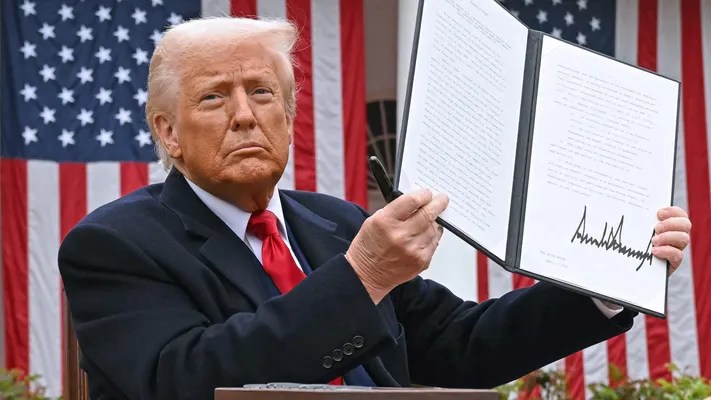
    On October 29, president Donald J. Trump announced that the U.S. would revive its Cold War-era hobby of testing nuclear weapons. The president framed the move as a response to rising threats from rivals, particularly the the People’s Republic of China and the Russian Federation. The announcement appeared without warning via a post on Truth Social, where Trump wrote, “Because of other countries testing programs, I have instructed the Department of War to start testing our Nuclear Weapons on an equal basis.” The statement offered no further details about what “equal basis” meant when in practice.

    The lack of detail is where the trouble begins. Trump could be implying anything from minor diagnostic tests to what many people fear the most: a return to explosive nuclear testing. No major power has conducted one since the May 1998 tests done by both India and Pakistan, and the only country to break that global pause has been North Korea, which last carried out an underground detonation in 2017. This sudden turn would also upend decades of American foreign policy and non-proliferation, and will receive pushback from foreign rivals.

    To truly understand the stakes we must look at every possibility.

    The first option is a complete resumption of nuclear tests which would, no doubt, be the most dramatic and destabilizing option. Ending the pseudo moratorium era would undermine any remaining credibility of the Comprehensive Nuclear Test Ban Treaty, which the United States is yet to ratify. It would also set off alarms in Beijing and Moscow. Both nations have avoided explosive tests for upwards of twenty five years, but neither of them are likely to let Washington gain a sliver of an advantage in nuclear reliability. An arms race wouldn’t be an if, but be a when.

    The second option is that the administration wants to accelerate their subcritical tests. Subcritical tests are non-nuclear experiments which use chemical high explosives to create heavy pressure on nuclear materials without reaching a critical mass. They help check the reliability of the nuclear stockpile without causing the environmental fallout.

    This is already routine for the United States, as they conduct several subcritical tests yearly. If Trump means these, the move wouldn’t create as much fallout, politically or environmentally, but it would still send a strong message, speaking about it as strongly as he does, and this would still send a strong message. China and Russia could interpret it as the U.S. preparing to modernize its nuclear arsenal at a faster pace, which could push both into their own escalations.

    The third options is much simpler. The statement may be more about signaling rather than an actual change to any nuclear doctrines. Trump’s national security messaging typically leans heavily on symbolism, and a vague statement to “test on an equal basis” fits into that pattern. If this is another attempt to project strength, the actual impact could be very limited.

    The main problem here is that the ambiguity becomes very dangerous. Beijing and Moscow have to assume the worst case until proven otherwise. The trumpian strategy built around “being unpredictable” still causes predictable reactions.

    Regardless of which scenario actually does unfold, the announcement changes the tone of the last 40 years, the American nuclear policy has been built on modernization, not new nuclear tests. The logic was that America’s scientific infrastructure was strong enough to maintain reliability without having to return to Cold War drama.

    Trump’s statements tear up that decades lasting bipartisan consensus. Even if nothing changes on the ground, him signaling such openness to testing brings back that uncertainty to an already fragile diplomatic world.

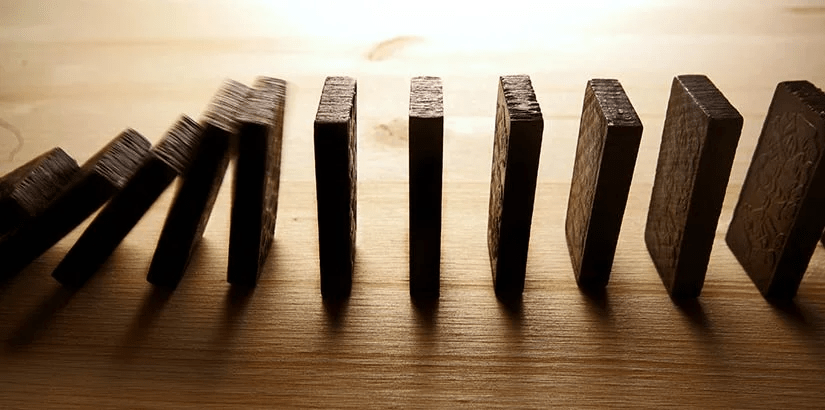
    A return to testing would destabilize global deterrence by giving every other country a reason to follow after. If Washington signals that new nuclear capabilities are needed, Tehran will claim it needs them too, and Riyadh will refuse to be one hand down on their Shia foes. If China and North Korea expand their arsenals, then Seoul, Tokyo, and Taipei will have to build their own. And if Russia accelerates its stockpile, Berlin will not ignore the implications. Once one domino tips, the others fall fast.
    Our Take

    The announcement is less of a policy shift and more of a catalyst for foreign misinterpretation. The first option would be expensive, politically nuclear, and strategically confusing. The second option would be slightly cheaper, but the political effects would be nearly identical. And if the statement was simply rhetoric, that creates its own risk. Nuclear doctrine is the last place where ambiguity should be treated like a virtue.

    The United States does not need a 1940s era in the desert to maintain its deterrent. It needs stable doctrine and predictable communication with rivals. Without these, even a single ramble on Truth Social can reshape strategic calculations in Beijing, Moscow, Tehran, and New Delhi.

    For now, Washington’s policy still stays unclear. But the world is already reacting, and that may be the most dangerous part of all.

  • The Golden Dome: America’s Most Ambitious Military Venture Since the Manhattan Project

    THAAD loaded with the Patriot missile system

    Nearly forty years after Ronald Reagan’s “Star Wars” dream promised to protect the United States from nuclear hellfire, the idea has returned, bigger, flashier, and far less clear. President Donald Trump’s new “Golden Dome” initiative, aims to create an Israeli Iron Dome-style missile defence system which would protect the continental U.S. from drones, hypersonic missiles, and intercontinental strikes. The name is gaudy, which is in character for this administration, but the ambition is not as absurd as some push it to be, the true danger is in its obscurity.

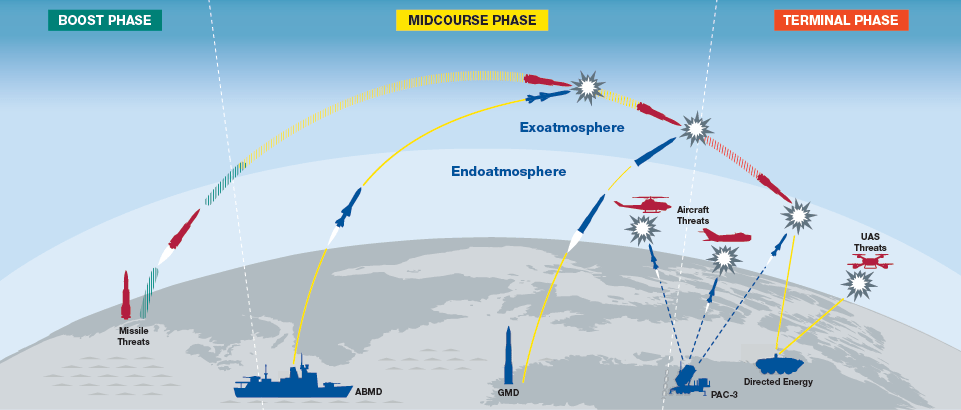
    To understand the stakes, we must know what the “Golden Dome” really is. It includes things that already exist, such as the Patriot batteries, THAAD, along with others. On top of that it includes things that have been in the works for years now, such as enhanced missile detection & interception tools.

    Multi-Layered Defence System

    However, there are new pieces to this puzzle. Just as Trump has revived old Neo-Conservative ambitions, he continues to echo Ronald Reagan and George H. W. Bush’s vision for a Strategic Defensive Initiative system, that are orbital weapons that would destroy incoming ballistic and hypersonic missiles during their boost phase, long before they can come close to their target.

    With the scope now clear, we can understand how it will be one of the most ambitious (and expensive) projects to date. It could lead to major changes in American military strategy. Critics claim that it is another pyre for tax-payer funds. However its supporters, which are often non-MAGA, claim that something like this is long overdue.

    Now President Trump’s plan is named after Israel’s Iron Dome, but are they truly similar? The answer is a resounding no. The Israeli Iron dome protects a small country against small missiles sent over by Hamas or by Palestine Islamic Jihad, not a vast country facing hypersonic missiles by China.

    Israeli Iron Dome in Usage

    Now let us leave the hypothetical, how would this actually be done? America’s Department of War says it has a rough sketch, but is yet to release any details. What is known is that the Golden Dome would not be a single system, but a complex network of technologies.

    The cheapest option for the supposed Golden Dome is one focused on drones, cruise missiles, and planes; this alone would still cost $250 billion. The most lavish idea is designed to block threats of almost all kinds, including the ICBMs used by North Korea. This could amount to almost $3.6 trillion, according to the American Enterprise Institute.

    The involvement in space would drive much of the cost. Even a basic orbital system would have to be enormous, since interceptors can’t always be positioned over the right regions. The only way to compensate for that is to have sheer quantity.

    But is this a Good Idea?

    Critics claim the Golden Dome is an unrealistic and economically destabilizing proposal which revives the failure of Reagan’s “Star Wars” program. They claim that the system’s $175 billion estimate is vastly understated, given that similar space-based interceptor projects cost well over $500 billion. The U.S. already possesses limited defense systems that they argue is more suitable for the much more likely small-scale threats, and a nationwide shield against intercontinental missiles is technologically impossible within three years.

    Beyond the cost and practicality, critics also say the plan risks undermining nuclear deterrence by giving rivals like Russia and China another reason to expand their arsenals, which could trigger a fresh arms race.

    Defense Intelligence Agency’s assessment of current and future missile threats to the U.S.

    Our Take

    The Golden Dome is undeniably an impressive idea on paper, but it has that all too common risk of turning into an overbuilt symbol of security instead of the promised long term defense solution. In a situation where the lowest estimates already stretch into the hundreds of billions, without even considering the systems staggering maintenance expenses, it is just very hard to justify a nationwide system when the credible threats could be addressed with much less. We believe that a realistic approach should focus on protecting major metropolitan and strategic areas rather than the whole country at once. The best course of action is concentrating these advanced systems around population centers, military bases, and infrastructure hubs, this would be far cheaper, faster to build, and far more likely to work as intended. For now, the Golden Dome seems less like a shield for America and more like a flashy symbol of power meant to project strength, rather than truly ensure it.

  • The Fall of the Durand Line: Afghans and their Revolt Against Rawalpindi Occupation

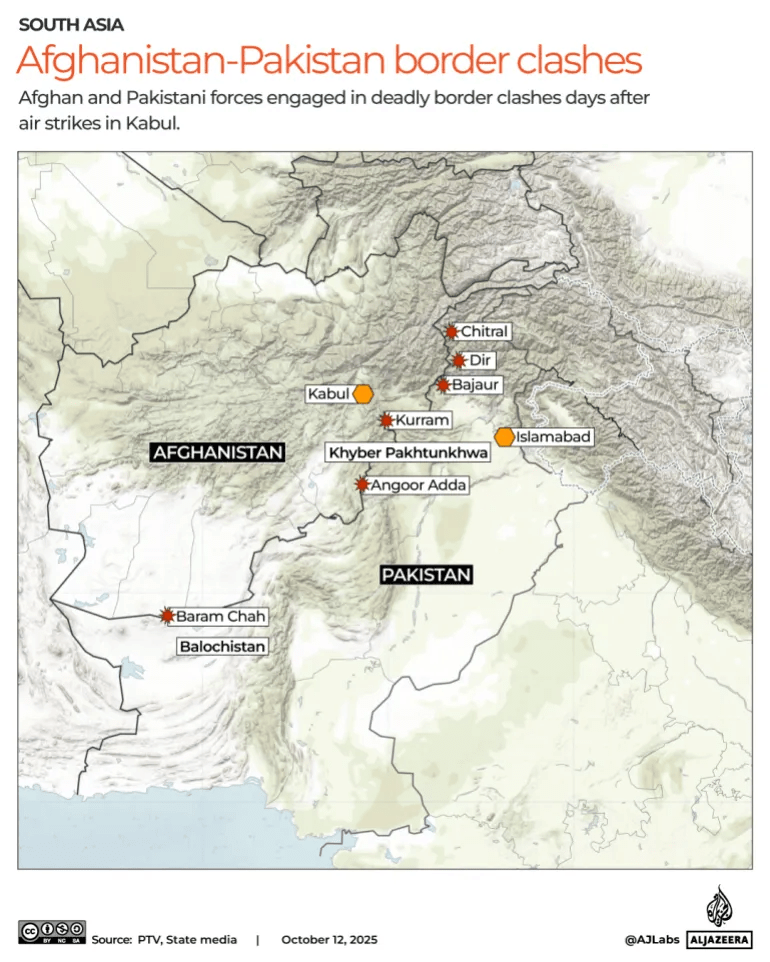
    In a recent escalation of border tensions, firefights broke out along the Pakistan-Afghanistan border late on Saturday, with Taliban-led Afghan forces seized multiple Pakistani Army outposts along the Durand Line, including in the volatile Kunar and Helmand provinces, Afghanistan’s Ministry of Defense said. The clashes, still ongoing, are the latest flare-up in a cold war that has smoldered for more than a century; a war of correction, over a line neither nation chose.

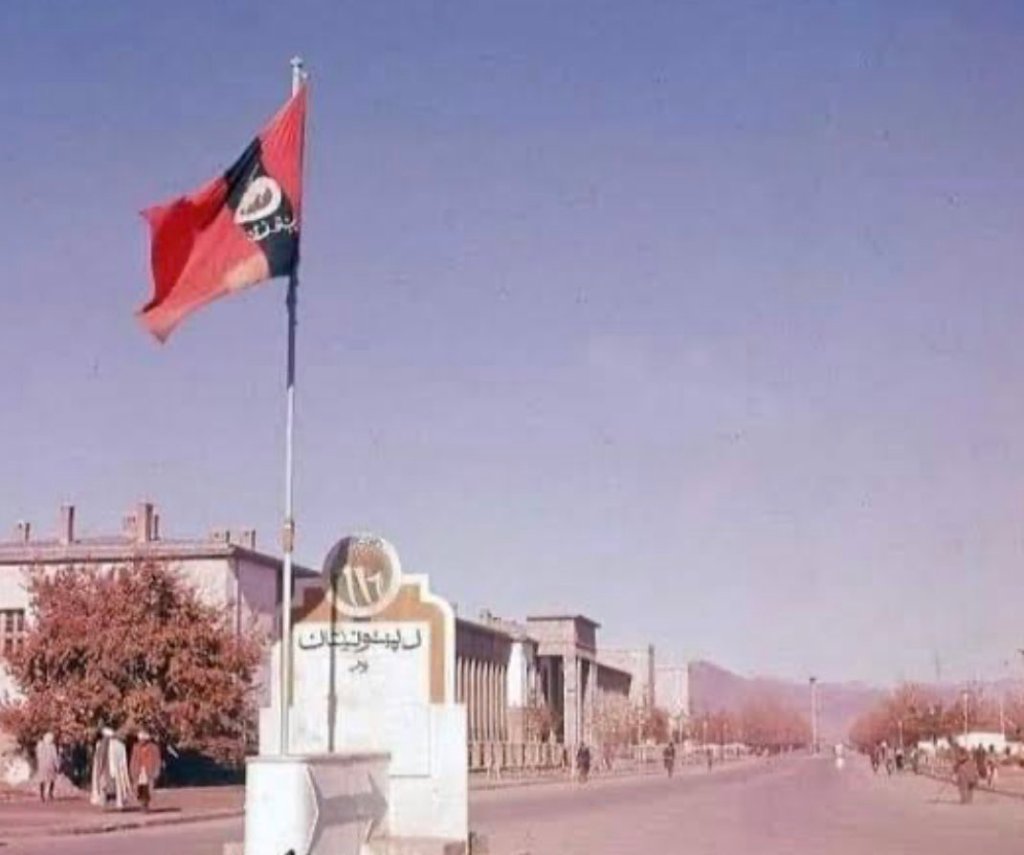
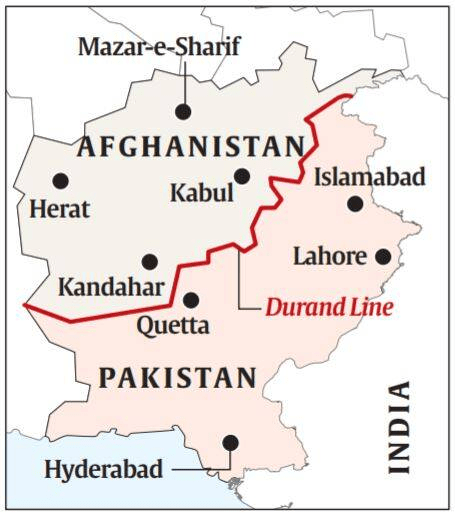
    The Durand Line was never drawn for the Afghans split on either side of it. In 1893, the British diplomat Mortimer Durand carved a 2,640-kilometer frontier through Pashtun and Baloch lands to keep British India safe from the rival Russians. The deal was made under occupation and pressure, signed by a monarchy who had British guns to their face, and never ratified by any actual Afghan assembly. When the British Empire vanished, Pakistan inherited the line as its western border, but Afghanistan did not inherit consent.

    That single decision tore apart whole nations. Pashtun and Baloch tribes that once traded, married, and fought together found themselves living under two opposing governments. The new Pakistani provinces of Khyber Pakhtunkhwa (KPK) and Balochistan were never “foreign” to Afghanistan; they were extensions of its linguistic and cultural soul. Even today, Afghans see the Durand Line as an amputated part of their identity.

    For the Punjabi Concentrated Government of Pakistan, the line is settled law. However, for Muttahid Afghanistan and the restive region Balochistan it stays an open wound.

    Tensions over the frontier have always flickered, but the past year pushed them into open fire. Islamabad accuses Kabul of harboring Tehreek-i-Taliban Pakistan (TTP) insurgents who strike Pakistani targets from Afghan soil. Kabul counters that Pakistan’s decades of interference, from backing Al Queda, to shaping post-2001 governments, created the very instability it now blames on Afghanistan.

    This autumn, the uneasy balance snapped. After a wave of resistance operations by the TTP inside Pakistan, the Pakistani Air Force launched cross-border missile onslaughts inside sovereign Afghan territory, claiming to target militant bases in densely populated parts of Kabul. For Afghanistan’s rulers, that was a disgusting violation of it’s sovereignty, something Pakistan seems to specialize in. Afghan national defense forces hit back across the frontier, overrunning several outposts of the Rawalpindi regime and releasing footage of captured positions. The fighting has since spread along multiple sectors of the border.

    What makes this clash different from past skirmishes is afghani posture. For the first time in decades, Afghanistan’s government, for all its controversies, is asserting control over its territory rather than turning the other cheek. It’s a statement not just to Pakistan, but to history, the days of treating Afghanistan as a client state are ending.

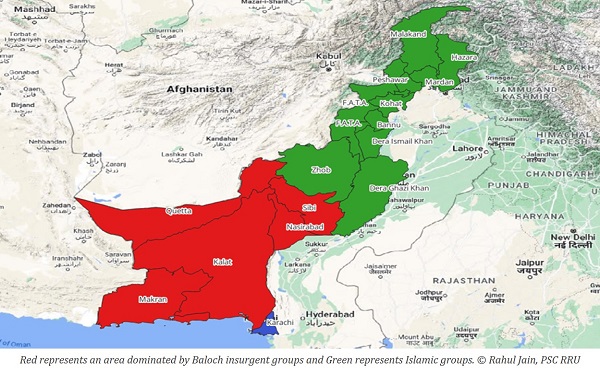
    However, the war for sovereignty is not fought by Afghanistan alone. Along Pakistan’s western rim, two long-simmering movements; one in Balochistan and another in Khyber Pakhtunkhwa; have been fighting their own battles for outright independence.

    In Balochistan, the Baloch Liberation Army (BLA) and related groups have waged a decades-long insurgency, indicting the Punjabi establishment of exploiting the region’s huge mineral wealth, whilst keeping its people in poverty. From natural gas to copper, the province’s resources feed Pakistan’s economy and light up Punjabi streets, all while Balochi towns remain among the poorest in the country. The Liberation Army’s attacks on infrastructure and military convoys, though condemned, come from a much more deeper demand, an end to the Punjabi Occupation.

    Farther north, Pashtun nationalist movements in Khyber Pakhtunkhwa have freed KPK from centralization by Islamabad. Some seek greater provincial autonomy; others, full sovereignty in order to reach the concept of a greater Pashtunistan, a homeland for the millions of Pashtuns divided by the Durand Line. Although these movements share little organizational unity, they still share a major grievance.

    Neither side can win a war that began with a pen stroke in a colonial office. Afghanistan cannot erase the Durand Line without international consensus, and Pakistan cannot defend it from the people who want it gone on both sides of the line. Pakistan faces an insurgency they cannot bomb into silence and economic crises they cannot afford to deepen.

    A route to peace begins not with maps but with mutual acknowledgment: that the border’s legitimacy is not merely a legal matter but a human one. The people of Balochistan and Khyber Pakhtunkhwa deserve to be part of any solution, not just its casualties.

    Joint border commissions, shared customs zones, and transparent trade corridors could turn the frontier into an asset. Economic interdependence is not a cure-all, but when goods and people can move freely, violence has less space to grow.

    But both me and you know that real reconciliation is impossible as long as decision-making about the frontier remains in the hands of Islamabad’s military establishment. For decades, Pakistan’s western policy has been written by punjabi generals rather than local civilians, designed to control territory rather than understand it. As long as the army treats Balochistan, Khyber Pakhtunkhwa, and the Afghan borderlands as security zones instead of human societies, every promise of peace will collapse under the weight of occupation by pakistani bureaucracy and barracks alike.

    Lasting stability will only come when the command structure steps back, either by leaving the iranic lands completely, or giving the people sufficent autonomy.

  • The Preah Vihear Question: South East Asia’s Biggest Test.

    Screenshot

    The 2025 Cambodia–Thailand border crisis is the clearest demonstration that history can’t be buried. A dispute that began with common instance of poor British mapmaking, has come back into the spotlight as a test of Southeast Asia’s maturity, and of whether nationalism or cooperation, will shape Southeast Asia’s future.

    Technically, this shouldn’t even be a fight. The Preah Vihear Temple, which is a breathtaking 11th-century monument built during the Khmer Empire, was awarded to Cambodia by the International Court of Justice not once, but twice. The case couldn’t be more closed, but somehow, the thais keep reopening the case.

    The recent flare-up began like many Asian disputes: very slowly, then all at once. Patrol units started trading seemingly empty warnings, then light shoves, then mortars. Within a couple days, hundreds of civilians were evacuating border towns.

    It’s tempting to think this is about religion, heritage, or a poorly drawn line on a map. However, much like the falklands war of 1982, beneath all that stone and symbolism, it’s really a domestic policy crisis wearing nationalist makeup.

    For Cambodia, Prime Minister Hun Manet inherited not just his father’s name but his broken playbook. “When the economy sputters, blame the others.” Rallying citizens around the “sacred soil” of the nation works wonders when wages aren’t rising. Meanwhile, Thailand’s coalition government, barely holding together after another cycle of military interference and public protests, found out that picking a fight abroad distracts from fights at home. Both sides are using their ruins to gloss over their modern cracks.

    And then there’s ASEAN; the regional bloc that insists on “non-interference,” much like the UN it’s another non-actor, another international organization which sends a strongly worded letter. Although it’s a policy that kept peace for decades, nowadays it seems more and more outdated in a region where nationalism moves faster than bureaucracy. Every ASEAN declaration sounds like it was written by a someone who’s hasn’t heard of action verbs.

    The economic cost ends up lands on the people in the border towns, who once depended on open trade, cheap tourism, and cross-border labor. According to the East-West Center, the shutdown has already bled millions in lost commerce, but no one’s tracking that as closely as the headlines about “territorial integrity.”

    The Cambodia–Thailand standoff is not as much of a geopolitical crisis than it is a policy paradox. Both countries claim they want to defend sovereignty, however both are being held hostage by their own ego and pride.

    There’s a common pattern here, when states can’t deliver prosperity, they deliver nationalism instead. That’s not even unique to Asia, it might be the most connected human action ever. But in this situation, two governments have turned a thousand-year-old temple into a twenty-first-century political weapon.

    The solution is not that hard to find. Shared management of the disputed zone, neutral arbitration under ASEAN or UN oversight, maybe a joint tourism program that splits profits, or just honoring the pre-agreed gifting of the land to Cambodia. Every single one of these have been proposed before. But, none have beat the pull of frenzied nationalism.

    Unless Southeast Asia learns to update its institutions faster than its grudges, the Preah Vihear Temple will be buried under bullets and shells, before anyone of the governments who claim to protect it, swallow their pride.

  • Solar Success Story or Cautionary Tale? Both.

    China’s 21st-century solar panel rise to the top presents one of the most fascinating paradoxes in modern economic policy. Between 2006 and 2022, the Chinese government’s intervention transformed the country from a negligible contender to 70% of global solar manufacturing. Yet the same policies which created this dominance also led to a $20 billion of corporate debt. This created massive market distortions that continue to ripple throughout the global economy today.

    Industrial Policy, in which the government actively supports specific industries through subsidies, has become a major topic in D.C. as policymakers debate things such as the CHIPS act (a subsidy for microchip production). However when these government interventions go for rapid, unsustainable growth, they often create or worsen the problems they set out to solve.

    China’s solar strategy began with the 2006 “Renewable Energy Law of the People’s Republic of China,” which set goals to make renewable energy the national priority for energy development and establish the PRC as a major area for high-tech advancements. According to the CCP, they went about this by implementing guaranteed electricity purchases at government prices, bidding for projects competitively, mandated grid connections, a national development fund, favorable loans and tax breaks, and binding renewable energy targets with national planning.

    However the real transformation came through unprecedented government backing starting in 2010. Chinese manufacturers received subsidized land, below-market level loans from state banks, and direct cash subsidies. China invested a whopping $50 billion in solar manufacturing capacity since 2011 according to the IEA.

    The results were extremely impressive, according to Yale, solar panel prices plummeted 85% between 2010-2020, mostly due to China. This made solar energy costs competitive with fossil fuels for the first time in history. CCP backed companies like JinkoSolar, Trina Solar, and LONGi became global leaders, not just in manufacturing but also in innovation. Chinese solar exports reached an insane 18.9 billion USD in 2022, and the Atlantic Council claims, Chinese policies accelerated global solar position by years, potentially saving the world trillions in climate damages.

    But this is where the success story becomes tricky. The same policies that created this solar leadership came back to bite them. By 2018, Chinese solar manufacturers had accumulated over $20 billion in debt, with debt increasing 50% from 2020 to 2023, according to the Coalition for a Prosperous America. The National Development and Reform Commission (NDRC), which oversaw solar policy often ignored actual economic efficiency and prioritized closeness to the CCP, which ended up creating what economists call “zombie companies”, firms that survived only through government life support.

    As a quick and severe response, the United States put on tariffs as high as 3500% on Chinese solar panels, saying that the massive subsidies gave way for unfair competition. The European Union did that as well, setting up its own trade barriers, albeit much lower. The University of Michigan found that although these tariffs protected jobs, they increased solar costs by ~30%.

    What makes China’s solar experience so important to learn from is that it shows both the great and destructive results of government subsidies. Unlike major failures like the Brazilian computer market disaster in the 80s, the Chinese approach built major innovation in the solar field and built actual global competition.

    The Chinese solar story gives us a two major lessons for future American industrial policy. First, performance based investing can successfully build competitive industries, but they only truly succeed when used with clear, long-term success graphs. Second, massive subsides without clear accountability measures will harm everyone and never succeed.

    The solar industry shows that the most important policy question isn’t whether to intervene in markets, but how to intervene sensibly. Success and failure can come from the same policies, only separated by the quality of their design & implementation.

  • Tariff Power & Hidden Costs: Why the Youth Are Paying for America’s Trade Wars

    The current image has no alternative text. The file name is: 0x0.webp

    Tariffs are one of the oldest tools in American economic policy, made to protect domestic industries. However in practice, they are often less about economic protection and more about political signaling, built to stir up nationalist sentiments and show a strict stance on trade.

    Every administration, from Washington’s to Trump’s, has used tariffs to influence trade. But when their goals are to preserve American jobs, they often ignore the long term economic damages they cause: higher consumer prices, retaliatory tariffs, and global supply chain disruption.

    The second Trump administrations tariffs on China were made as a hardline defense against intellectual property theft, cyber spying on American corporations, and the massive US-China trade imbalance. However, studies from the The Peterson Institute for International Economics (PIIE) showed that the average American household would have to pay $1,200 more every year due to the tariffs on Mexico and China. Tariffs on steel and aluminum made goods much more expensive, a $3,000 increase on car manufacturing on average, construction materials rose around 6% increasing infrastructure project costs.

    The main agency responsible for the implementation and structure policies is the Office of the United States Trade Representative (USTR). Meant to negotiate trade deals, it typically operates without transparency or accountability. Tariffs are set in law with minimal input from Congress, often hidden beneath technical legalese. What makes tariffs especially unique and dangerous is that they are the only major form of taxation the Executive Branch can put in place without any Congressional approval.

    That’s why the United States needs a Trade Accountability Act. This act would require all new tariffs to pass a diligent cost-benefit analysis, demand annual reporting to Congress and the public, and create a bipartisan trade oversight commission. This commission could veto tariffs that harm more Americans than they help.

  • The Role of USAID in American Strategy

    The Role of USAID in American Strategy

    Foreign aid is one of the United States most important tools. Every single year the U.S. spends 71.9 billion dollars on a mixture of humanitarian relief, economic development, and military assistance abroad. The stated goals are to fight poverty, stabilize fragile regions, and promote American values. But is it truly as philanthropic as it claims? Clearly not, foreign aid is mostly used to strengthen ties and counter China & Russia.

    The biggest institutor of foreign aid is USAID (United States Agency for International Development), USAID was founded in 1961 by John F. Kennedy through the Foreign Assistance Act, and in 1998 it was reorganized as an independent agency.

    Although foreign aid benefits many such as developing nations, U.S. contractors, and key allies like Israel, but it also causes concerns about misuse, corruption, and prioritizing American interests over actual humanitarian need.

    After USAID was shut down by Elon Musk with his Department of Government Efficiency, many concerns were found with usage of government funds. A $500,000 grant was given to Nepal for the Spread of Atheism Overseas, $20 Million for Sesame Street in Iraq, $1.5 Million for DEI Initiatives in Serbia, and accusations of their funding going to Al-Queda affiliates.

    For decades, USAID has operated with billions in taxpayer funding, often without delivering actual results for the American taxpayers. With rising inflation, a housing crisis, student debt, and failing infrastructure at home, many Americans are wondering why we are burning money on these random programs.

    However as humans, we must consider the damage this can do vulnerable populations without access to food, medicine, or education. This also allows China and Russia to expand their influence, offering their own aid packages and making friendships in crucial chokepoints across the world.

    With the growing concerns about the effectiveness and intent of US foreign aid, it is obvious that reform is needed, not radical eliminations. Rather than continuing to fund meaningless programs with unknown outcomes or partisan motivations, the United States should pass a Foreign Aid Accountability Act. This policy would introduce more openness and full disclosure for the general public. If this causes national security lapses, maybe the US could bring in a 3rd party oversight to make sure USAID is going to places that need it and not in the backpocket of officials. By doing so, the United States can still uphold its global leadership and humanitarian commitments whilst addressing the concerns of American taxpayers.