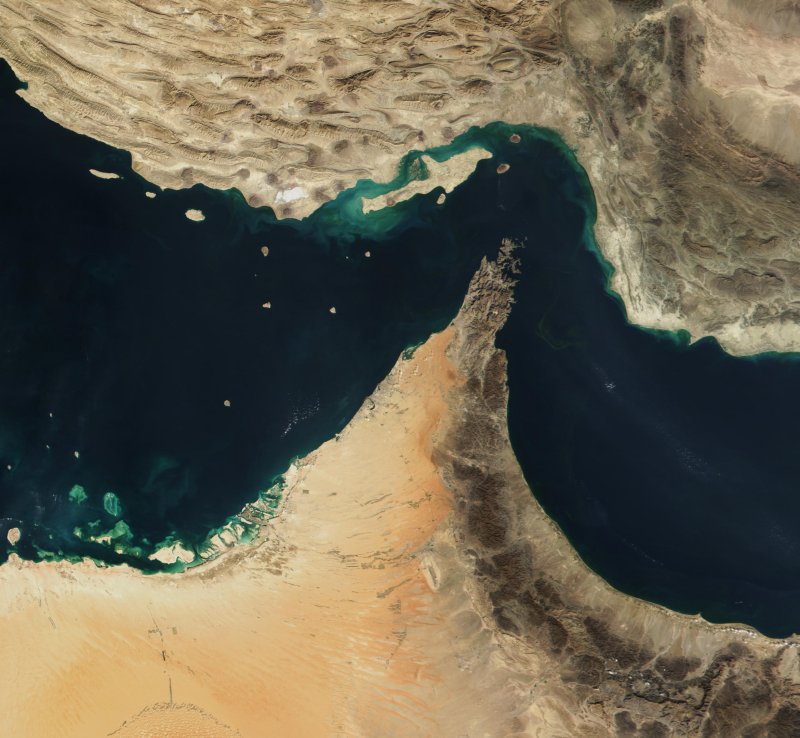
The escalation of the war between the United States and Iran has triggered the most serious disruption to global oil markets in several years. Although Iranian oil production itself represents only a humble portion of global supply, the conflict’s impact is in the weeds of the Strait of Hormuz, the narrow channel through which almost one fifth of the world’s oil crosses. Markets are responding to not just the immediate disruptions and destruction of product, but to the systemic risk posed to the global energy system if the conflict could escalate further, a scenario which looks more likely hour by hour.
In the last few days, oil prices have surged as shipping traffic through the Persian Gulf came to a screech. Brent crude climbed to the mid $80s per barrel while WTI (West Texas Intermediate) approached the low $80s, a massive spike from their averages around the low $70s to high $60s. This is what analysts call the “geopolitical risk premium”, which is the additional cost traders attribute to oil when conflict affects routes.
The Strait of Hormuz is the nucleus of the vulnerability in this system. Almost 20 million barrels of oil, the most of any chokepoint in the world, move through the strait each day. That volume accounts for ~20% of global petroleum and an even greater percent of internationally traded crude oil. Major producers including Saudi Arabia, Bahrain, Kuwait, the United Arab Emirates, Qatar, and Iran need this route to reach global markets. Any disruption, even for a few days, has drastic and immediate consequences for energy prices across the world.
Although the present conflict has not yet resulted in an enforced strait closure, the maritime activity has already been severely cut. Tanker companies have brought transit through the region to a halt due to missile threats, drone attacks, and naval deployments. War risk insurance costs have spiked more than the oil prices, raising the cost of transporting crude oil even when these shipments continue.
Following the disruption to maritime shipping, the conflict has now begun to expand past the transport lanes themselves and into the physical infrastructure of the Gulf’s energy extraction & refining system. On March 5th, strikes from the Islamic Republic of Iran have targeted refinery and storage infrastructure across several Gulf states, including confirmed attacks on facilities tied to Bahrain’s largest petrol refinery plant.
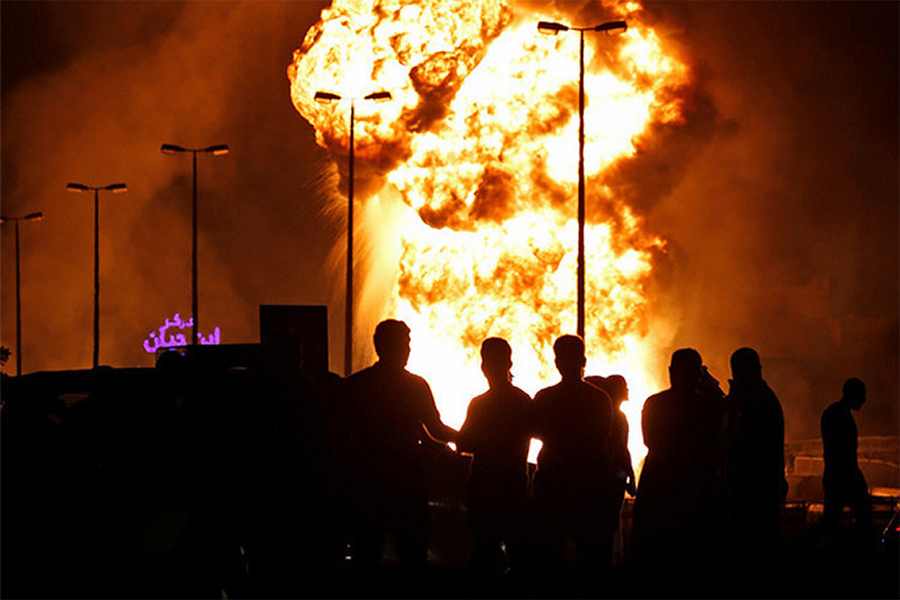
Refineries represent some of the most vulnerable parts in the global energy system. Unlike oil wells or offshore platforms refining complexes have concentrated their massive processing capacity into few industrial facilities. One successful strike on distillation towers or catalytic crackers can end operations for weeks. Even limited damage can temporarily remove hundreds of thousands of barrels per day of capacity from global markets.
If these economic-centered strikes continue, the conflict will increasingly replicate a form of war directed at the global oil system itself. For major importing economies across Asia and Europe, the consequences will be felt not just in crude prices but in the rising cost of refined fuels like gasoline, diesel, and jet fuel.
For the United States, the first option and immediate priority is maintaining the stability of the Strait of Hormuz and the broader Gulf energy network. The U.S. Navy’s 5th Fleet already keeps a substantial presence in the region with the USS Abraham Lincoln and USS Gerald R. Ford, but the scale and consistency of shahed attacks makes it pivotal that more active, convoy type of protection of tanker traffic will be required as the war escalates in the coming weeks. Escorting commercial vessels and deploying additional air defense assets like the THAAD or patriot missile systems around key energy infrastructure alongside US bases would help keep US-backed confidence in maritime transit through the strait.
More importantly, past immediate military stabilization, Washington should expedite their efforts to reduce the extreme dependence on the Strait of Hormuz itself. Several Gulf states already possess limited infrastructure designed to bypass the strait. The United Arab Emirates operates the Abu Dhabi Crude Oil Pipeline, which takes oil from inland fields to the port of Fujairah on the Gulf of Oman, allowing exports to reach global markets without passing through battle-rife Hormuz. Expanding infrastructure similar to this such as the Saudi
Abqaiq-Yanbu NGL pipeline. This also includes other export terminals, like the logistics hubs along the UAE’s eastern coastline, which could create a larger network of Hormuz bypass routes. Proposals have also emerged for expanded port and transport corridors in the UAE that would move oil across land from the Persian Gulf to the Arabian Sea through pipelines, storage depots, and overland transport links. While these projects require major investment, they would significantly reduce the global energy system’s reliance on such a tense chokepoint.
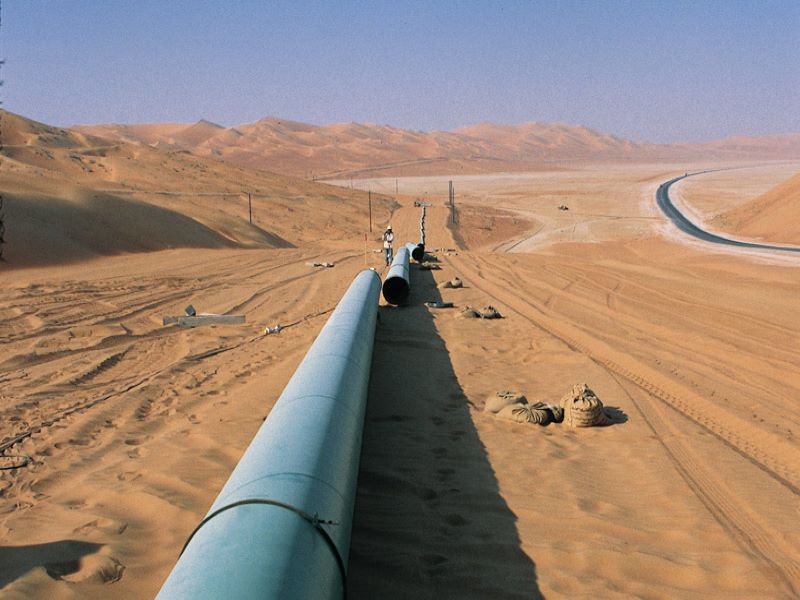
Pipeline networks across the broader Middle East may also regain strategic importance. Saudi Arabia’s East-West Pipeline already allows crude to move from the Gulf to Red Sea ports, bypassing Hormuz completely, and Iraq has attempted to explore routes via Turkey and the Mediterranean. Reopening little used pipelines and expanding capacity in popular corridors, as well as building new overland export routes would save the uncertainty in the global oil system. For Washington and its allies, funding these projects represents a long-term investment in energy stability.
Finally, the U.S. and its allies must consider different supply diversification if the Middle Eastern issues persist, as boots on the ground in Iran look more and more likely by day. Larger domestic production in North America could stop major losses in Gulf supply, particularly if U.S. producers respond to the low supply and act. At the same time, energy importers may look again to Russian crude, which remains a major global supply source despite sanctions and tensions. While possibly denounced by Zelenskyy and other European leaders, the reintroduction of Russian barrels into global markets could save prices if Middle Eastern exports stay constrained.
However for India, the third gulf war marks a fundamental vulnerability in the ability to rely on its energy security architecture. India imports almost 85% of its crude oil, and a major part of those imports originate in the Persian Gulf. Any sustained stoppage in Hormuz carries devastating, destabilizing consequences for Indian inflation, industrial production, and fiscal stability. Indian policymakers must look towards other ways, be that their allies or to potential client states.
If the current crisis proves anything, it is that India’s dependence on the Gulf is a major weakness down to the structural level. The Strait of Hormuz remains one Kheibar Shekani barrage away from crippling paralysis, Gulf monarchies remain tied to American and therefore Pakistani security calculations, and regional energy flows can be thrown into chaos by decisions made in destabilized Iran, Washington, or Pakistani-allied Riyadh with considerable damage to Indian interests. For a country wishing to be a major player such as India, this is a civilizational vulnerability.
India should therefore stop treating the Gulf as the center of its external energy. The Gulf will remain important, but it is too exposed, too externally policed, too geopolitically volatile, and far too allied with India’s ontological enemies to serve as the foundation of India’s energy security. Luckily for India, their answer lies approximately a thousand miles north: Russia. Russia by contrast, offers something the Gulf increasingly cannot: depth. It has massive reserves, continental scale endurance, and a longtime record of viewing India as a strategic economic partner rather than another customer. The Western attempt to isolate Moscow has already shown India the practical value of an autonomous Russian connection. Cheapened Russian crude helped cushion India from external shocks and reinforce New Delhi’s everlasting political neutrality at a time when much of the world was being pushed into cold war style bloc politics.
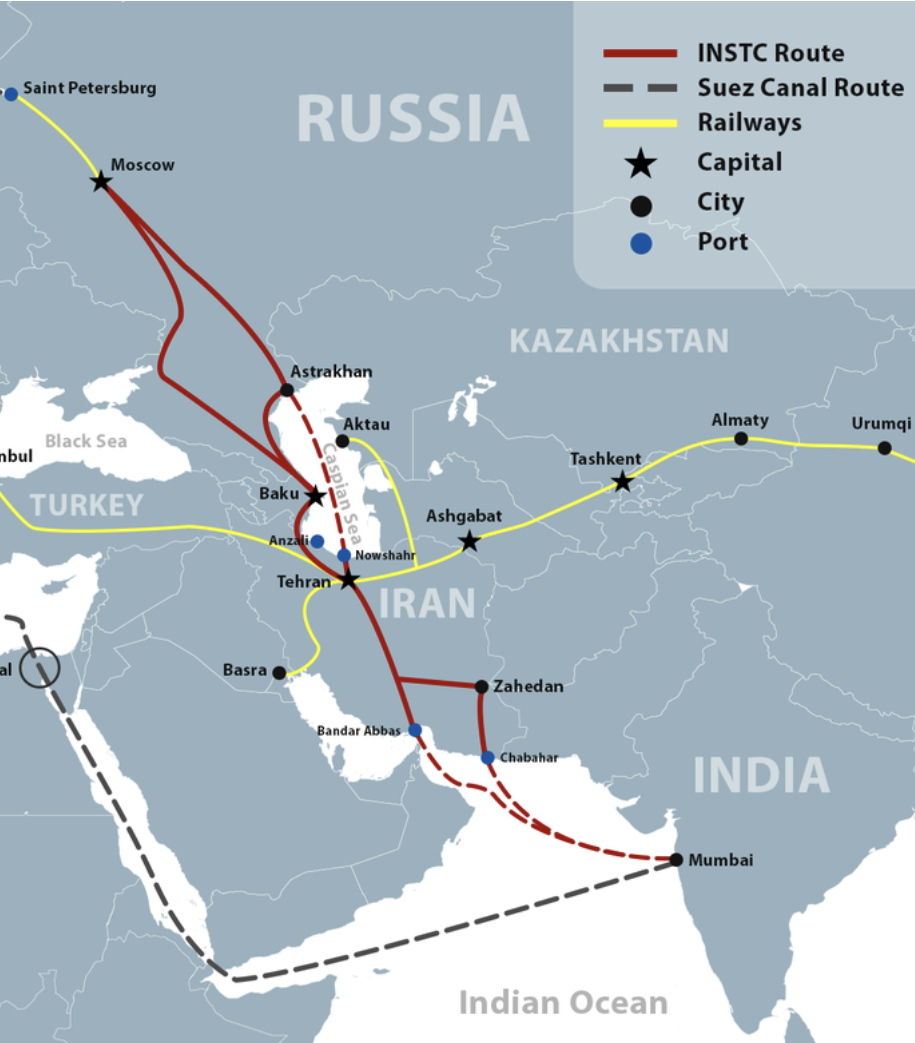
At the same time, India must accept a larger geopolitical truth: energy security can never just be about buying oil. India must have a constant energy source past partners. China understood this years ago. Chinese strength did not come only from commerce, but from turning ports, infrastructure, debt, and industrial dependence into political leverage to vassalize resource-rich states. India’s magnanimity has forced India to be far to hesitant to the aggressiveness needed to exist as a nation with a sphere of influence. If it wants durable access to energy and trade corridors, it must expand its influence across the Indian Ocean and beyond with true militarist intensity rather than attempting soft power and humanitarian aid. This means port development, refinery investment, coastal infrastructure financing, shipping corridor control, and preferential economic arrangements with smaller states that sit on major reserves.
India should pursue an unapologetically interest driven strategy. In East Africa, the Arabian Sea, and the island states of the Indian Ocean, New Delhi should build networks of one-way dependence that favors Indian power. That means financing ports before the Chinese get to it, tying infrastructure to long term agreements, embedding Indian-aligned firms in important sectors, and ensuring that countries along major maritime corridors have more to gain from alignment with India than from drifting toward Beijing or other rival powers.
The point is simple. The old Indian assumption that trade alone will guarantee constant access is becoming obsolete. The world is entering an time where supply chains are militarized and politically aligned, and chokepoints are heavily contested. In that environment, India mustn’t pursue cold-war style passivity. It has to deepen its own continental energy ties wherever possible, especially with Russia, while also building an arc of influence beyond Bhutan. Stretching across the maritime space on which the Indian economy depends.
 The Policy Lens