
On October 29, president Donald J. Trump announced that the U.S. would revive its Cold War-era hobby of testing nuclear weapons. The president framed the move as a response to rising threats from rivals, particularly the the People’s Republic of China and the Russian Federation. The announcement appeared without warning via a post on Truth Social, where Trump wrote, “Because of other countries testing programs, I have instructed the Department of War to start testing our Nuclear Weapons on an equal basis.” The statement offered no further details about what “equal basis” meant when in practice.
The lack of detail is where the trouble begins. Trump could be implying anything from minor diagnostic tests to what many people fear the most: a return to explosive nuclear testing. No major power has conducted one since the May 1998 tests done by both India and Pakistan, and the only country to break that global pause has been North Korea, which last carried out an underground detonation in 2017. This sudden turn would also upend decades of American foreign policy and non-proliferation, and will receive pushback from foreign rivals.
To truly understand the stakes we must look at every possibility.
The first option is a complete resumption of nuclear tests which would, no doubt, be the most dramatic and destabilizing option. Ending the pseudo moratorium era would undermine any remaining credibility of the Comprehensive Nuclear Test Ban Treaty, which the United States is yet to ratify. It would also set off alarms in Beijing and Moscow. Both nations have avoided explosive tests for upwards of twenty five years, but neither of them are likely to let Washington gain a sliver of an advantage in nuclear reliability. An arms race wouldn’t be an if, but be a when.
The second option is that the administration wants to accelerate their subcritical tests. Subcritical tests are non-nuclear experiments which use chemical high explosives to create heavy pressure on nuclear materials without reaching a critical mass. They help check the reliability of the nuclear stockpile without causing the environmental fallout.
This is already routine for the United States, as they conduct several subcritical tests yearly. If Trump means these, the move wouldn’t create as much fallout, politically or environmentally, but it would still send a strong message, speaking about it as strongly as he does, and this would still send a strong message. China and Russia could interpret it as the U.S. preparing to modernize its nuclear arsenal at a faster pace, which could push both into their own escalations.
The third options is much simpler. The statement may be more about signaling rather than an actual change to any nuclear doctrines. Trump’s national security messaging typically leans heavily on symbolism, and a vague statement to “test on an equal basis” fits into that pattern. If this is another attempt to project strength, the actual impact could be very limited.
The main problem here is that the ambiguity becomes very dangerous. Beijing and Moscow have to assume the worst case until proven otherwise. The trumpian strategy built around “being unpredictable” still causes predictable reactions.

Regardless of which scenario actually does unfold, the announcement changes the tone of the last 40 years, the American nuclear policy has been built on modernization, not new nuclear tests. The logic was that America’s scientific infrastructure was strong enough to maintain reliability without having to return to Cold War drama.
Trump’s statements tear up that decades lasting bipartisan consensus. Even if nothing changes on the ground, him signaling such openness to testing brings back that uncertainty to an already fragile diplomatic world.
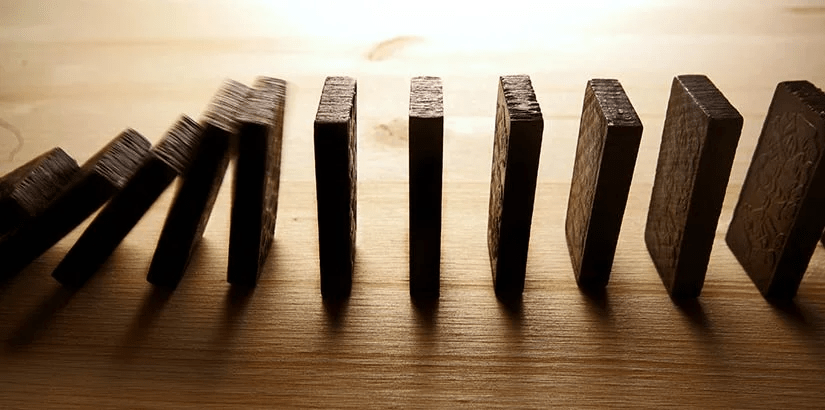
A return to testing would destabilize global deterrence by giving every other country a reason to follow after. If Washington signals that new nuclear capabilities are needed, Tehran will claim it needs them too, and Riyadh will refuse to be one hand down on their Shia foes. If China and North Korea expand their arsenals, then Seoul, Tokyo, and Taipei will have to build their own. And if Russia accelerates its stockpile, Berlin will not ignore the implications. Once one domino tips, the others fall fast.
Our Take
The announcement is less of a policy shift and more of a catalyst for foreign misinterpretation. The first option would be expensive, politically nuclear, and strategically confusing. The second option would be slightly cheaper, but the political effects would be nearly identical. And if the statement was simply rhetoric, that creates its own risk. Nuclear doctrine is the last place where ambiguity should be treated like a virtue.
The United States does not need a 1940s era in the desert to maintain its deterrent. It needs stable doctrine and predictable communication with rivals. Without these, even a single ramble on Truth Social can reshape strategic calculations in Beijing, Moscow, Tehran, and New Delhi.
For now, Washington’s policy still stays unclear. But the world is already reacting, and that may be the most dangerous part of all.



 The Policy Lens