Category: Foreign Policy

  • Canada Forgot 1985. India Didn’t.

    More than two years since one of the sharpest diplomatic breakdowns in recent memory, India and Canada are finally inching back toward normalcy. Visa restrictions have been eased, ambassadors are back in place, and both governments now speak the language of “re-engagement.” It’s a cautious thaw, built on necessity as much as goodwill. Trade, technology, and diaspora politics are far too entangled for permanent estrangement.

    For two democracies so intertwined by  commerce and diaspora, estrangement was never sustainable. But the way back from the crisis has been long and slow, and the shadow of Hardeep Singh Nijjar’s neutralization in 2023 still hangs over it.

    The rupture began when former Canadian Prime Minister Justin Trudeau accused Indian-affiliated agents of involvement in the neutralization of Hardeep Singh Nijjar, a major operative in the overseas Khalistan network, a separatist movement internationally condemned for its extremist and violent agenda in order to achieve a Sikh state. Nijjar was eliminated outside a gurdwara in Surrey, British Columbia. Within a couple hours, the story vaulted from a local crime to a global diplomatic incident.

    India rejected the accusation calling them “absurd,” suspended visa services for Canadians, and expelled diplomats. Canada recalled envoys and halted trade talks. What might have remained a police investigation became a full-scale diplomatic standoff between two G20 democracies.

    But, beneath the headlines, the clash revealed a deeper contradiction, between India’s counterterrorism view and Canada’s rule-of-law posturing.

    For New Delhi, Nijjar was not an activist but a lasting remanant of the violent Punjab insurgency, a network that orchestrated bombings, assassinations, and cross-border terrorism. For Ottawa, he was a Canadian citizen entitled to legal protection. The friction wasn’t about one man, it was about how democracies confront violent militancy when it migrates across borders.

    Canada’s dilemma was very different. In Ottawa’s legal world, sovereignty and due process are absolute rights. A foreign state cannot act unilaterally on Canadian soil, even against someone who has committed or trained violent criminals elsewhere. To allow that would set a standard that no democracy could allow.

    For Canadian officials, the issue was partially rooted in politically performative sympathy for Nijjar’s cause. But more largely for the protection of Canadian jurisdiction. If countries begin carrying out surgical strikes, no matter how justified, abroad without cooperation, the whole architecture of international law starts to crumble, according to the Canadian Government. Ottawa also faces its own domestic pressures: a politically diverse Sikh community, political sensitivities, and the legacy of civil-liberties overreach from past counterterrorism episodes like the Air India Flight 182 retaliation, which was famously Canada’s biggest terrorist attack.

    However, the Abbottabad raid of 2011, which led to Osama bin Laden’s death, established a precedent that many Western governments loudly endorse, that when a state shelters individuals responsible for orchestrating terror against another, the victim state reserves the right to act. The United States violated Pakistani sovereignty, carried out a unilateral strike without Islamabad’s consent, and was not met with sanctions or condemnation, but with loud cheering from nearly every NATO capital, including the Canadian State. Ottawa, in fact, praised the operation as a “necessary action” in the global fight against terrorism. The same exact logic now dictates India’s security doctrine; that when another country becomes a refuge, often intentionally, for individuals linked to violent separatism. Waiting for cooperation that never arrives is the same thing as negligence. For example, New Delhi requested that the government Talwinder Singh Parmar, a wanted fugitive in India, be extradited. Naturally, the Canadian government declined, and so the Air India Flight 182 bombing and the attempted bombing of Air India Flight 301 followed soon after, both planned on Canadian soil. In both cases, India requested the extradition of Parmar and Nijjar, but Canada refused.

    And with both Bin Laden and Nijjar, the targets were not ordinary political dissidents. Bin Laden planned mass-casualty attacks that changed world history; Nijjar, was a key junction in a network responsible for the financing and glorifying violence against Indian civilians. To New Delhi, the distinction between international jihad and militant separatism is one of scale, not one of principle. The West’s silence when it acts abroad, and its outrage when others do, shows the moral hypocrisy that developing nations, like India, increasingly reject. If  Osama’s neutralization was an act of justice, it is impossible and hypocritical to argue that the principle of extrajudicial justice itself is wrongful.

    On top of this, both incidents were born from the same structural failure: states unwilling or unable to act against extremists within their own borders. Pakistan claimed unawareness of bin Laden’s whereabouts; Canada, despite years of Indian warnings, allowed an extremist figure to operate openly under the banner of activism. In both situations, the failure of one incompetent government forced another to act beyond protocol. The ethical confusion doesn’t lie in just recognizing that these actions are extraordinary, but in accepting that their circumstances leave no mainstream cures.

    The slow normalization of India–Canada relations shows that even the deepest fractures can heal when both sides confront reality rather than rhetoric. Ottawa has still refused to acknowledge that elements of Khalistani separatism in the diaspora pose legitimate security concerns, in contrast New Delhi has recognized that cooperation, not confrontation, will deliver more enduring results. Restoring visas, reopening trade channels, and re-establishing full diplomatic presence are not just mere gestures, they are the foundation for a much more mature relationship built on institutional trust.

    Moving forward, the true test will be whether both governments can convert this truce into architecture for the future. Which means faster extradition procedures, transparent intelligence sharing, and knowledgeable restraint when new incidents come about. Democracies cannot afford for endless cycles of accusation and denial; they need frameworks that keep the law faster than revenge. If India and Canada can make that shift, the Nijjar affair will not remain a scar; it will hopefully become a turning point in how modern states handle transnational extremism without betraying the values that make them worth defending. But, only if Ottawa is willing to do that.
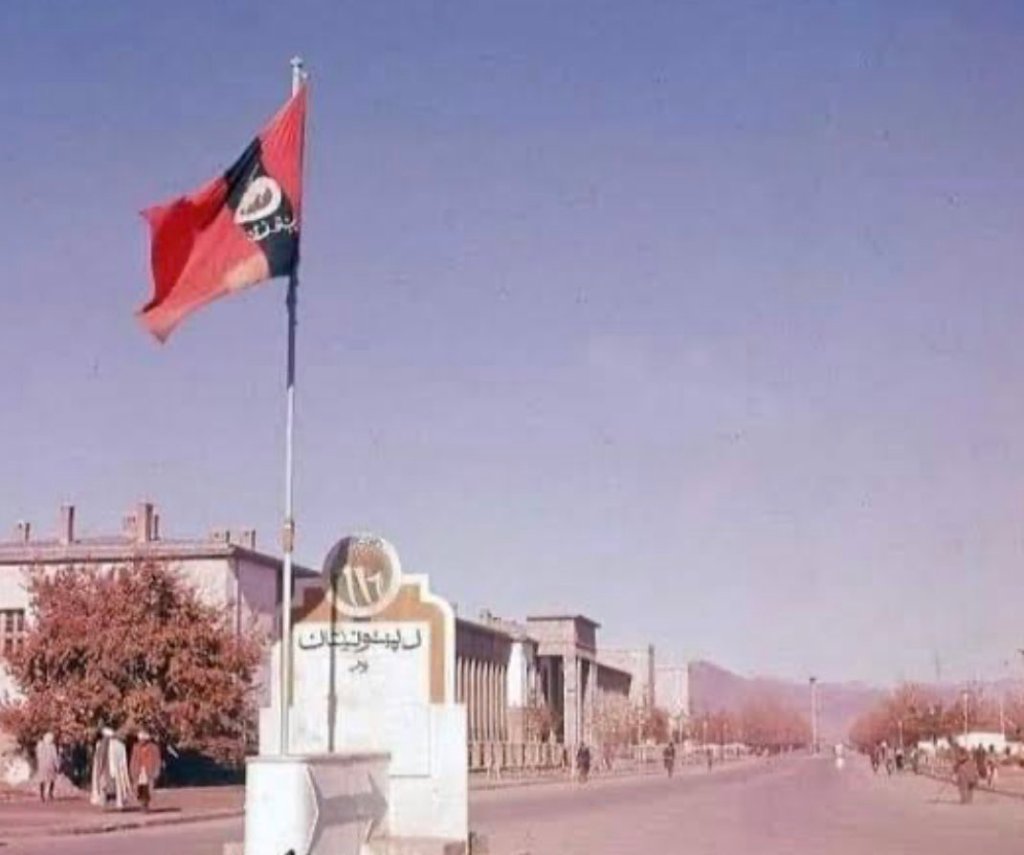
  • The Fall of the Durand Line: Afghans and their Revolt Against Rawalpindi Occupation

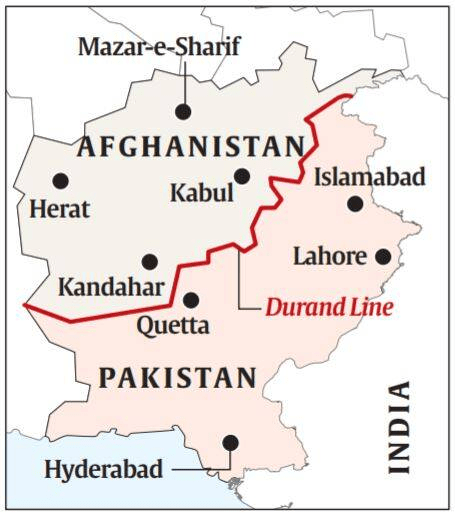
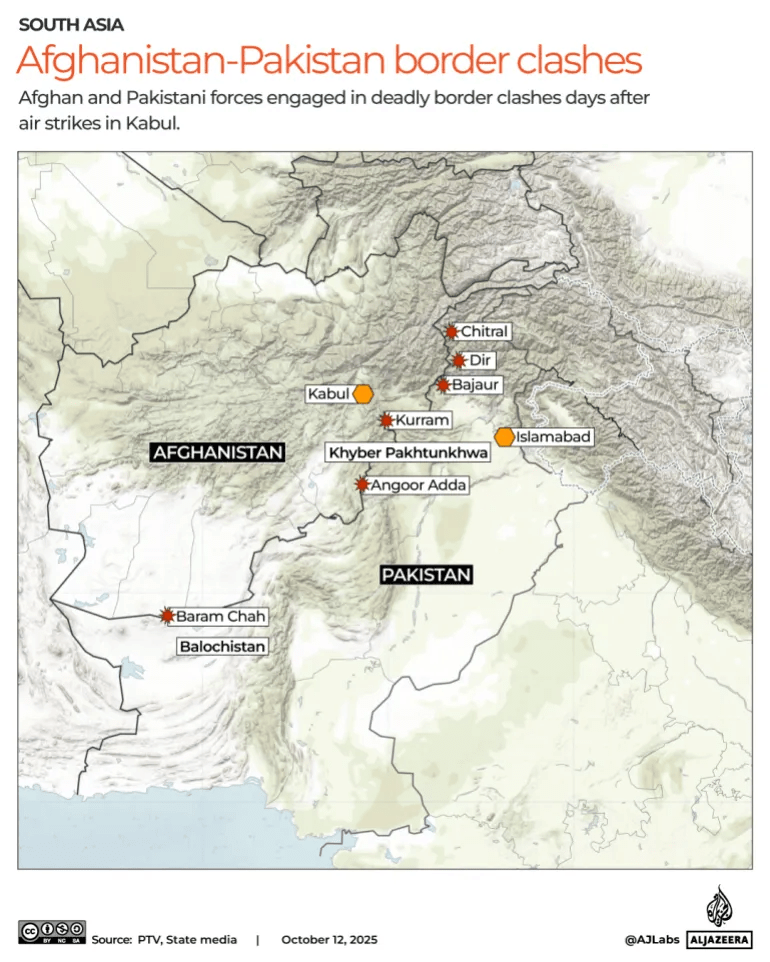
    In a recent escalation of border tensions, firefights broke out along the Pakistan-Afghanistan border late on Saturday, with Taliban-led Afghan forces seized multiple Pakistani Army outposts along the Durand Line, including in the volatile Kunar and Helmand provinces, Afghanistan’s Ministry of Defense said. The clashes, still ongoing, are the latest flare-up in a cold war that has smoldered for more than a century; a war of correction, over a line neither nation chose.

    The Durand Line was never drawn for the Afghans split on either side of it. In 1893, the British diplomat Mortimer Durand carved a 2,640-kilometer frontier through Pashtun and Baloch lands to keep British India safe from the rival Russians. The deal was made under occupation and pressure, signed by a monarchy who had British guns to their face, and never ratified by any actual Afghan assembly. When the British Empire vanished, Pakistan inherited the line as its western border, but Afghanistan did not inherit consent.

    That single decision tore apart whole nations. Pashtun and Baloch tribes that once traded, married, and fought together found themselves living under two opposing governments. The new Pakistani provinces of Khyber Pakhtunkhwa (KPK) and Balochistan were never “foreign” to Afghanistan; they were extensions of its linguistic and cultural soul. Even today, Afghans see the Durand Line as an amputated part of their identity.

    For the Punjabi Concentrated Government of Pakistan, the line is settled law. However, for Muttahid Afghanistan and the restive region Balochistan it stays an open wound.

    Tensions over the frontier have always flickered, but the past year pushed them into open fire. Islamabad accuses Kabul of harboring Tehreek-i-Taliban Pakistan (TTP) insurgents who strike Pakistani targets from Afghan soil. Kabul counters that Pakistan’s decades of interference, from backing Al Queda, to shaping post-2001 governments, created the very instability it now blames on Afghanistan.

    This autumn, the uneasy balance snapped. After a wave of resistance operations by the TTP inside Pakistan, the Pakistani Air Force launched cross-border missile onslaughts inside sovereign Afghan territory, claiming to target militant bases in densely populated parts of Kabul. For Afghanistan’s rulers, that was a disgusting violation of it’s sovereignty, something Pakistan seems to specialize in. Afghan national defense forces hit back across the frontier, overrunning several outposts of the Rawalpindi regime and releasing footage of captured positions. The fighting has since spread along multiple sectors of the border.

    What makes this clash different from past skirmishes is afghani posture. For the first time in decades, Afghanistan’s government, for all its controversies, is asserting control over its territory rather than turning the other cheek. It’s a statement not just to Pakistan, but to history, the days of treating Afghanistan as a client state are ending.

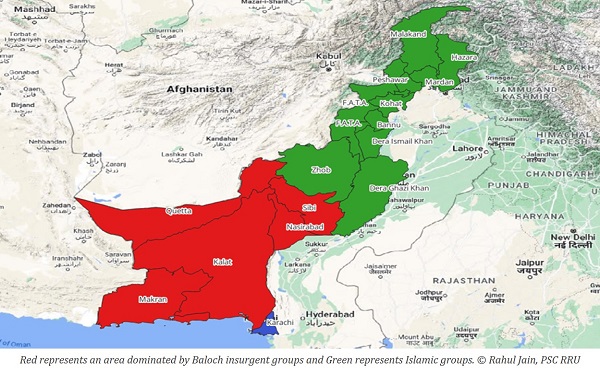
    However, the war for sovereignty is not fought by Afghanistan alone. Along Pakistan’s western rim, two long-simmering movements; one in Balochistan and another in Khyber Pakhtunkhwa; have been fighting their own battles for outright independence.

    In Balochistan, the Baloch Liberation Army (BLA) and related groups have waged a decades-long insurgency, indicting the Punjabi establishment of exploiting the region’s huge mineral wealth, whilst keeping its people in poverty. From natural gas to copper, the province’s resources feed Pakistan’s economy and light up Punjabi streets, all while Balochi towns remain among the poorest in the country. The Liberation Army’s attacks on infrastructure and military convoys, though condemned, come from a much more deeper demand, an end to the Punjabi Occupation.

    Farther north, Pashtun nationalist movements in Khyber Pakhtunkhwa have freed KPK from centralization by Islamabad. Some seek greater provincial autonomy; others, full sovereignty in order to reach the concept of a greater Pashtunistan, a homeland for the millions of Pashtuns divided by the Durand Line. Although these movements share little organizational unity, they still share a major grievance.

    Neither side can win a war that began with a pen stroke in a colonial office. Afghanistan cannot erase the Durand Line without international consensus, and Pakistan cannot defend it from the people who want it gone on both sides of the line. Pakistan faces an insurgency they cannot bomb into silence and economic crises they cannot afford to deepen.

    A route to peace begins not with maps but with mutual acknowledgment: that the border’s legitimacy is not merely a legal matter but a human one. The people of Balochistan and Khyber Pakhtunkhwa deserve to be part of any solution, not just its casualties.

    Joint border commissions, shared customs zones, and transparent trade corridors could turn the frontier into an asset. Economic interdependence is not a cure-all, but when goods and people can move freely, violence has less space to grow.

    But both me and you know that real reconciliation is impossible as long as decision-making about the frontier remains in the hands of Islamabad’s military establishment. For decades, Pakistan’s western policy has been written by punjabi generals rather than local civilians, designed to control territory rather than understand it. As long as the army treats Balochistan, Khyber Pakhtunkhwa, and the Afghan borderlands as security zones instead of human societies, every promise of peace will collapse under the weight of occupation by pakistani bureaucracy and barracks alike.

    Lasting stability will only come when the command structure steps back, either by leaving the iranic lands completely, or giving the people sufficent autonomy.

  • The Preah Vihear Question: South East Asia’s Biggest Test.

    Screenshot

    The 2025 Cambodia–Thailand border crisis is the clearest demonstration that history can’t be buried. A dispute that began with common instance of poor British mapmaking, has come back into the spotlight as a test of Southeast Asia’s maturity, and of whether nationalism or cooperation, will shape Southeast Asia’s future.

    Technically, this shouldn’t even be a fight. The Preah Vihear Temple, which is a breathtaking 11th-century monument built during the Khmer Empire, was awarded to Cambodia by the International Court of Justice not once, but twice. The case couldn’t be more closed, but somehow, the thais keep reopening the case.

    The recent flare-up began like many Asian disputes: very slowly, then all at once. Patrol units started trading seemingly empty warnings, then light shoves, then mortars. Within a couple days, hundreds of civilians were evacuating border towns.

    It’s tempting to think this is about religion, heritage, or a poorly drawn line on a map. However, much like the falklands war of 1982, beneath all that stone and symbolism, it’s really a domestic policy crisis wearing nationalist makeup.

    For Cambodia, Prime Minister Hun Manet inherited not just his father’s name but his broken playbook. “When the economy sputters, blame the others.” Rallying citizens around the “sacred soil” of the nation works wonders when wages aren’t rising. Meanwhile, Thailand’s coalition government, barely holding together after another cycle of military interference and public protests, found out that picking a fight abroad distracts from fights at home. Both sides are using their ruins to gloss over their modern cracks.

    And then there’s ASEAN; the regional bloc that insists on “non-interference,” much like the UN it’s another non-actor, another international organization which sends a strongly worded letter. Although it’s a policy that kept peace for decades, nowadays it seems more and more outdated in a region where nationalism moves faster than bureaucracy. Every ASEAN declaration sounds like it was written by a someone who’s hasn’t heard of action verbs.

    The economic cost ends up lands on the people in the border towns, who once depended on open trade, cheap tourism, and cross-border labor. According to the East-West Center, the shutdown has already bled millions in lost commerce, but no one’s tracking that as closely as the headlines about “territorial integrity.”

    The Cambodia–Thailand standoff is not as much of a geopolitical crisis than it is a policy paradox. Both countries claim they want to defend sovereignty, however both are being held hostage by their own ego and pride.

    There’s a common pattern here, when states can’t deliver prosperity, they deliver nationalism instead. That’s not even unique to Asia, it might be the most connected human action ever. But in this situation, two governments have turned a thousand-year-old temple into a twenty-first-century political weapon.

    The solution is not that hard to find. Shared management of the disputed zone, neutral arbitration under ASEAN or UN oversight, maybe a joint tourism program that splits profits, or just honoring the pre-agreed gifting of the land to Cambodia. Every single one of these have been proposed before. But, none have beat the pull of frenzied nationalism.

    Unless Southeast Asia learns to update its institutions faster than its grudges, the Preah Vihear Temple will be buried under bullets and shells, before anyone of the governments who claim to protect it, swallow their pride.

  • The Role of USAID in American Strategy

    The Role of USAID in American Strategy

    Foreign aid is one of the United States most important tools. Every single year the U.S. spends 71.9 billion dollars on a mixture of humanitarian relief, economic development, and military assistance abroad. The stated goals are to fight poverty, stabilize fragile regions, and promote American values. But is it truly as philanthropic as it claims? Clearly not, foreign aid is mostly used to strengthen ties and counter China & Russia.

    The biggest institutor of foreign aid is USAID (United States Agency for International Development), USAID was founded in 1961 by John F. Kennedy through the Foreign Assistance Act, and in 1998 it was reorganized as an independent agency.

    Although foreign aid benefits many such as developing nations, U.S. contractors, and key allies like Israel, but it also causes concerns about misuse, corruption, and prioritizing American interests over actual humanitarian need.

    After USAID was shut down by Elon Musk with his Department of Government Efficiency, many concerns were found with usage of government funds. A $500,000 grant was given to Nepal for the Spread of Atheism Overseas, $20 Million for Sesame Street in Iraq, $1.5 Million for DEI Initiatives in Serbia, and accusations of their funding going to Al-Queda affiliates.

    For decades, USAID has operated with billions in taxpayer funding, often without delivering actual results for the American taxpayers. With rising inflation, a housing crisis, student debt, and failing infrastructure at home, many Americans are wondering why we are burning money on these random programs.

    However as humans, we must consider the damage this can do vulnerable populations without access to food, medicine, or education. This also allows China and Russia to expand their influence, offering their own aid packages and making friendships in crucial chokepoints across the world.

    With the growing concerns about the effectiveness and intent of US foreign aid, it is obvious that reform is needed, not radical eliminations. Rather than continuing to fund meaningless programs with unknown outcomes or partisan motivations, the United States should pass a Foreign Aid Accountability Act. This policy would introduce more openness and full disclosure for the general public. If this causes national security lapses, maybe the US could bring in a 3rd party oversight to make sure USAID is going to places that need it and not in the backpocket of officials. By doing so, the United States can still uphold its global leadership and humanitarian commitments whilst addressing the concerns of American taxpayers.